
Pillar guide
AI Agents: The Complete Guide to Building Ones That Work in Production
AI agents can research, make decisions and complete multi-step work. The gap between an impressive demo and a system you'd trust in production is the whole job. This is our practical guide to crossing it.
What an AI agent actually is
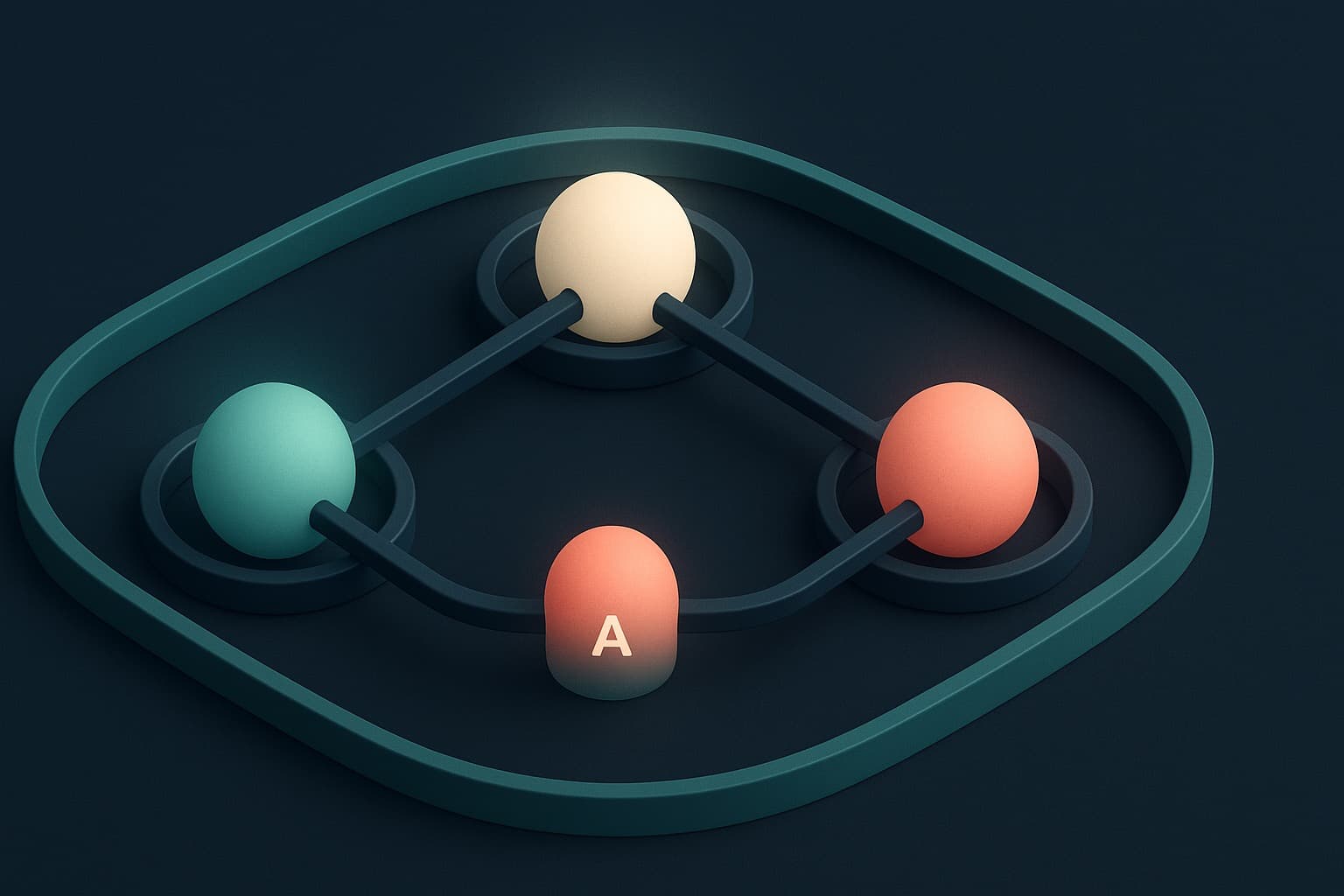
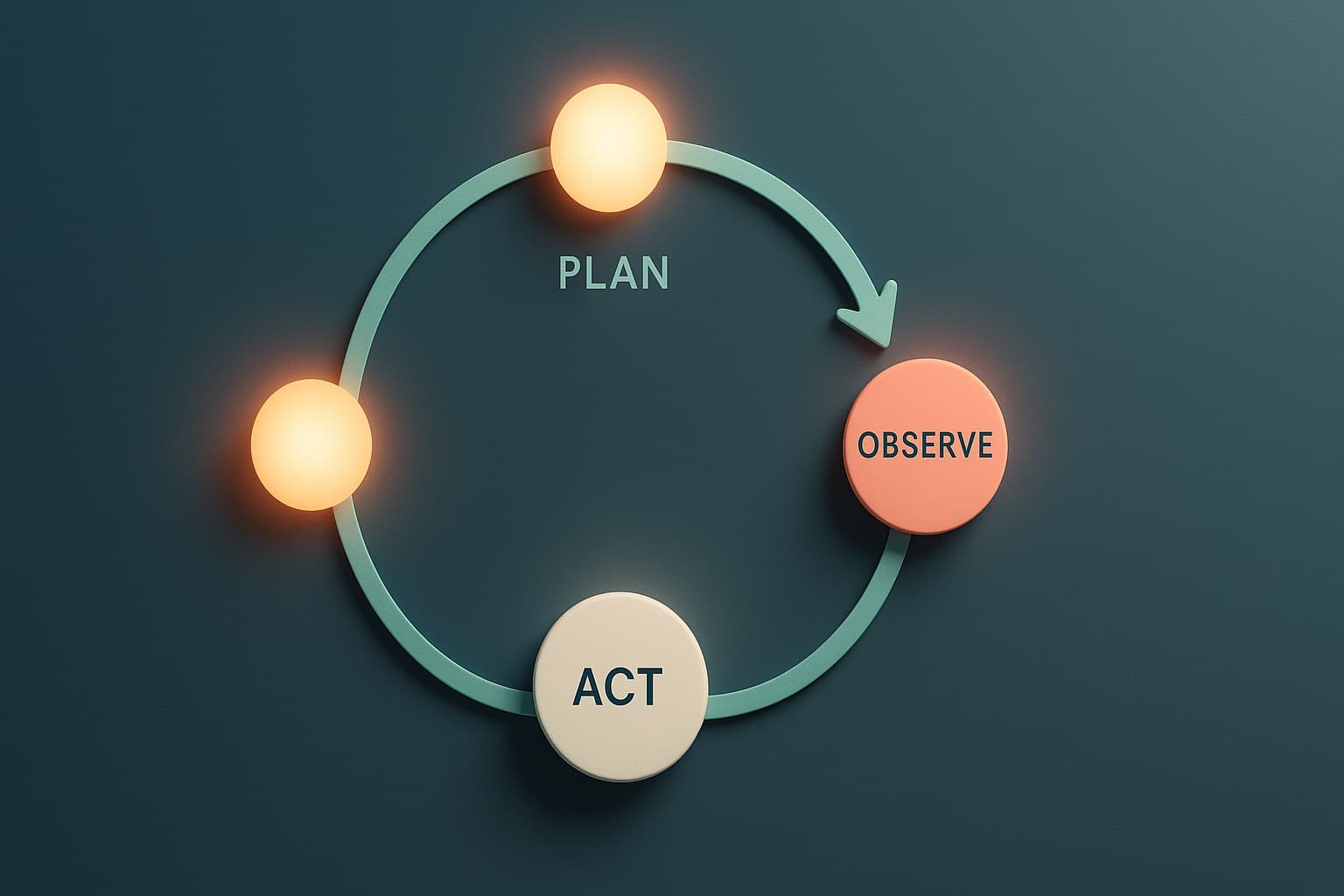
An AI agent is a language model wrapped in a loop: it's given a goal, it plans, it calls tools to take real actions, it observes the results, and it repeats until the work is done. The model is the reasoning engine; the value is in the scaffolding around it.
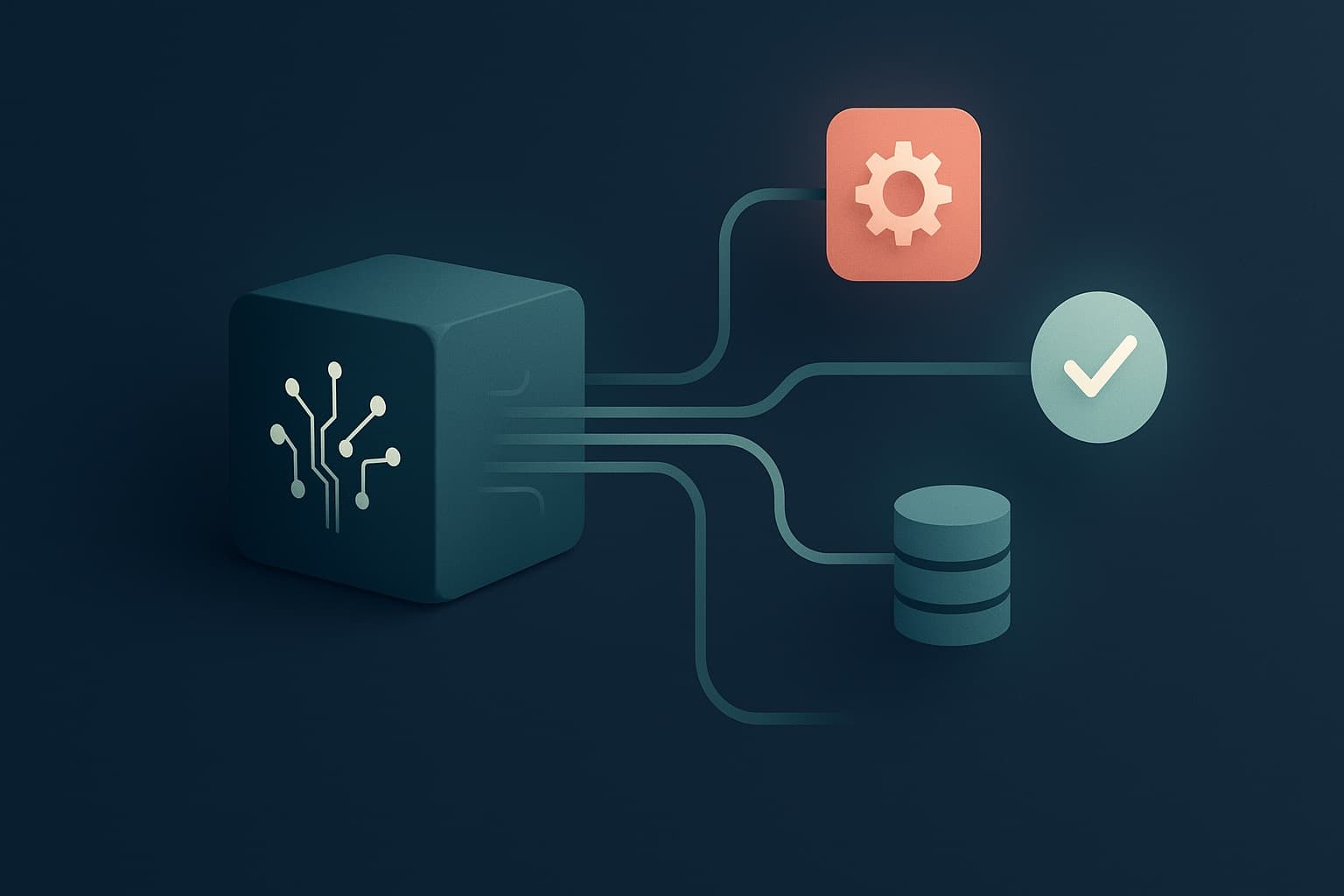
That scaffolding, the tools it can call, the memory it can use, the guardrails that constrain it, and the way its work is checked, is what separates a reliable agent from a clever autocomplete. Most agent failures are scaffolding failures, not model failures.
Why agents fail outside the demo
A demo runs on hand-picked inputs in a forgiving environment. Production sends messy, adversarial and unexpected inputs all day. Agents that looked magical fall over because they were given too much freedom and too little structure.
- Too much autonomy: the agent is free to take actions it should never have been allowed to take.
- No evaluation: quality is a feeling, not a measured number, so you can't tell if a change helped.
- Silent failure: nobody can see what the agent decided or why, so debugging is guesswork.
- Unbounded cost: a looping agent quietly burns tokens and latency with no ceiling.
The anatomy of a reliable agent
A dependable agent treats the model as one component in a system you control. Tools are well-defined and permission-scoped. Memory is used only where it earns its place. The planner can be inspected and tested. High-stakes actions require human approval.
Done this way, an agent becomes predictable: you know what it can do, what it can't, and how you'd catch it when it's wrong.
Guardrails, evaluation and observability
Before an agent goes live it needs a test set of realistic inputs and a way to score its outputs against them. Guardrails (validation, scoped tools, human approval) turn 'usually fine' into 'safe by design'. Observability, logging every step, tool call and decision, turns a production mystery into a five-minute fix.
When not to use an agent
If a task is well-defined and rule-based, a deterministic workflow beats an agent every time: it's cheaper, faster and easier to trust. Reserve agents for genuinely open-ended, multi-step work where their flexibility earns its keep. Choosing the simpler tool is a sign of senior judgement, not a lack of ambition.
How we help with this
AI Agents & Assistants
Agents that do real work, reliably, not just in a demo.
Explore AI Agents →AI Pipelines & Workflow Automation
Automate the repetitive, error-prone work that slows you down.
Explore Automation →AI Consulting & Strategy
Turn AI from a buzzword into measurable business value.
Explore AI Consulting →Go deeper
Articles in this series
Common questions
How do you stop an agent doing something harmful?+
Scoped permissions, input and output validation, evaluation against test cases, and human approval on any high-stakes action. The agent only ever has access to the tools it genuinely needs.
Which agent framework should we use?+
Whichever fits the problem. We're framework- and model-agnostic and optimise for reliability, cost and maintainability rather than chasing the newest library.
How long does it take to build a production agent?+
A focused prototype often takes a couple of weeks; hardening it for production, with evals, guardrails and observability, is where the rest of the time goes. We scope it so the first useful version ships fast.
Get in touch
Want this applied to your business?
Tell us what you're trying to do and we'll reply with an honest, practical next step.