AI Agents
Beyond the Demo: Building AI Agents That Work in Production
By Niall · 8 min read

Demos are easy. Reliability is the job. Here's what separates a production agent from an impressive prototype.
An AI agent that researches, calls tools and completes multi-step tasks is genuinely impressive in a demo. Then it meets a real input it wasn't expecting, takes a wrong action with confidence, and the magic evaporates. The distance between that demo and a system you'd trust in production is the entire job.
Why agents fail outside the demo
- They're given too much freedom and not enough constraint.
- There's no evaluation, so quality is a vibe, not a number.
- Failure is silent, no one can see what the agent actually did.
- Edge cases that never appeared in testing dominate real traffic.
The anatomy of a reliable agent
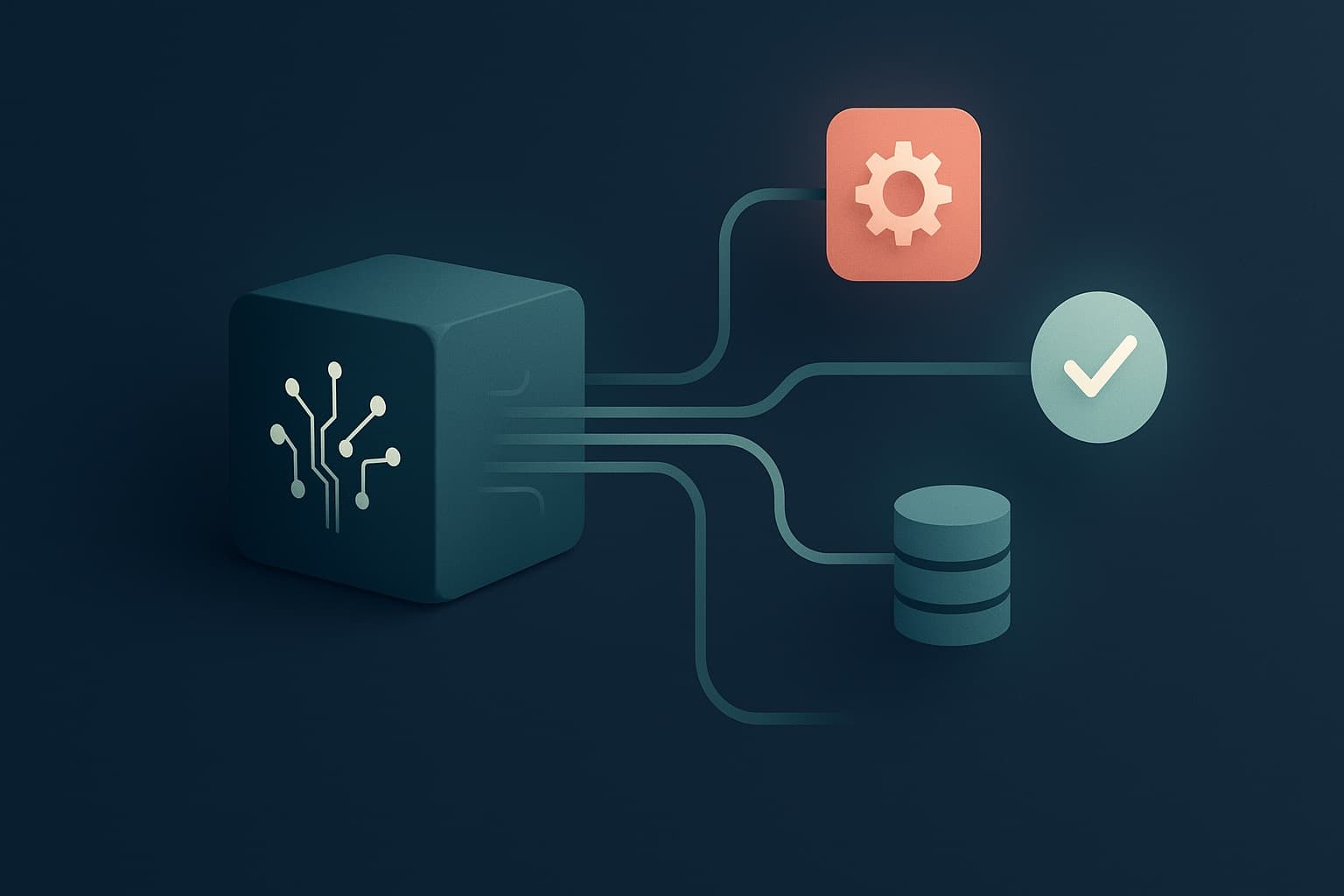
A dependable agent is less about a clever prompt and more about disciplined engineering around the model: well-defined tools, scoped permissions, memory only where it helps, and a planner that can be inspected and tested.
Guardrails and evaluation
Before an agent goes live, you need a test set of realistic inputs and a way to score outputs against them. Guardrails, validation, scoped tools, and human approval on high-stakes actions, turn 'usually fine' into 'safe by design'. Evals turn changes from guesswork into measured improvements.
Observability
If you can't see what the agent decided and why, you can't fix it. Log every step, tool call and decision. When something goes wrong in production, and it will, observability is the difference between a five-minute fix and a mystery.
When not to use an agent
Sometimes a simple, deterministic workflow beats an agent. If the task is well-defined and rule-based, automate it directly. Reserve agents for genuinely open-ended, multi-step work where their flexibility earns its keep.
Relevant services