AI Agents
Multi-Agent Systems: When Several Agents Beat One
By Niall · 7 min read

A team of agents can be the right design, or a complicated way to do what one well-scoped agent would do better.
Multi-agent systems are having a moment. The idea is appealing: instead of one agent juggling everything, a team of them, each with a role, collaborating like a well-run department. Sometimes that is exactly the right design. Often it is a more complicated way to do something a single, well-scoped agent would have done more reliably.
The honest question is not whether multiple agents are impressive, it is whether they earn the coordination cost they add. Here are the patterns that work, when the complexity pays off, and the price you pay for splitting one brain into several.
What multi-agent really means
A multi-agent system is one where several specialised agents, often each with their own prompt, tools and remit, work together on a task that one agent would otherwise handle alone. They pass information between them, divide the work, and combine results. The appeal is the same as in a human team: specialisation, parallelism, and a separation of concerns that keeps each part simple.
The catch is also the same as in a human team: communication overhead, misunderstandings, and the risk that coordinating the work costs more than the work itself. Those trade-offs decide whether the pattern helps or hurts.
Get the framing right and the rest follows. If you would not hand the whole job to one person, a single agent may struggle too; if you would, one agent is probably your answer, with the others adding cost rather than capability.
The planner and workers pattern
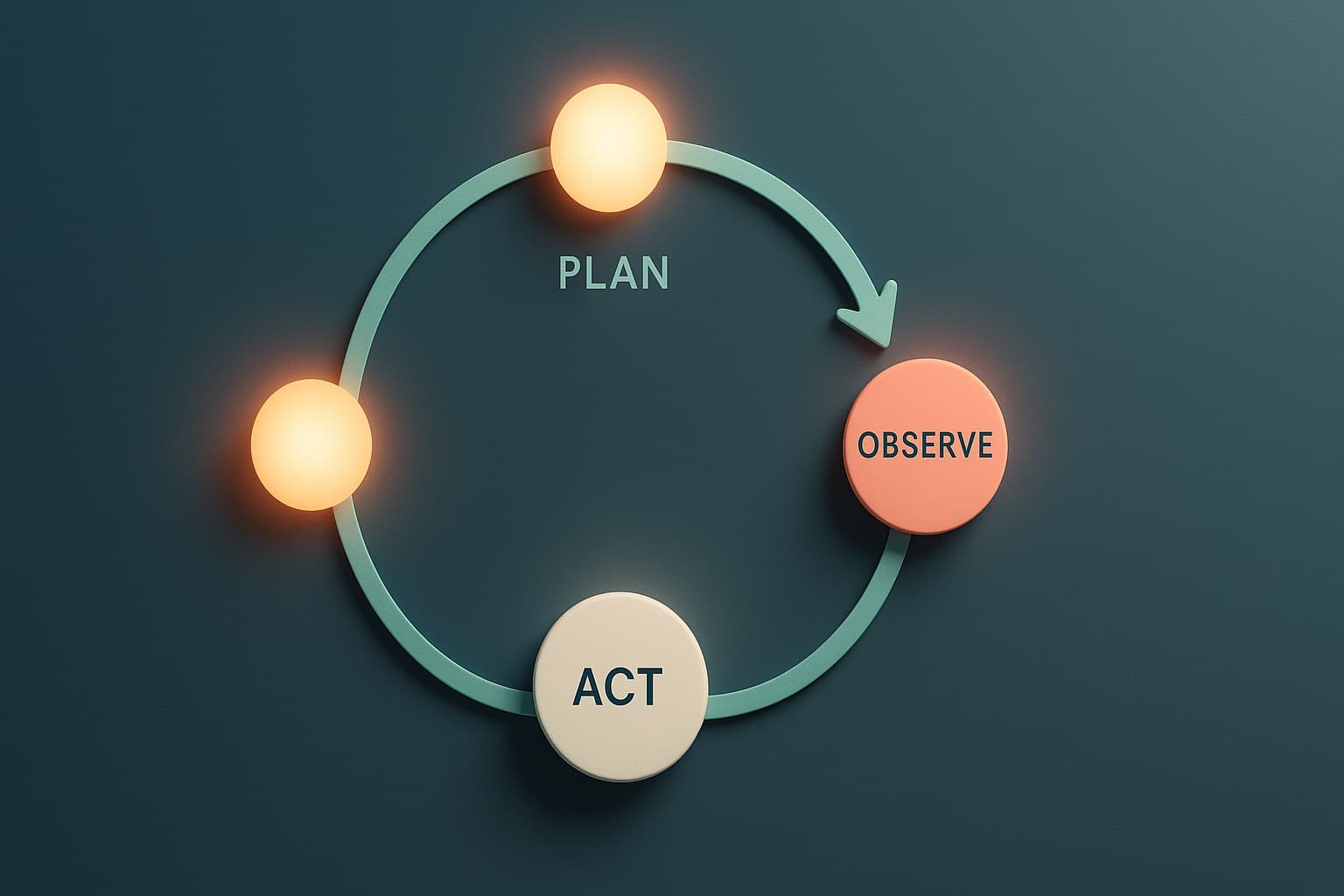
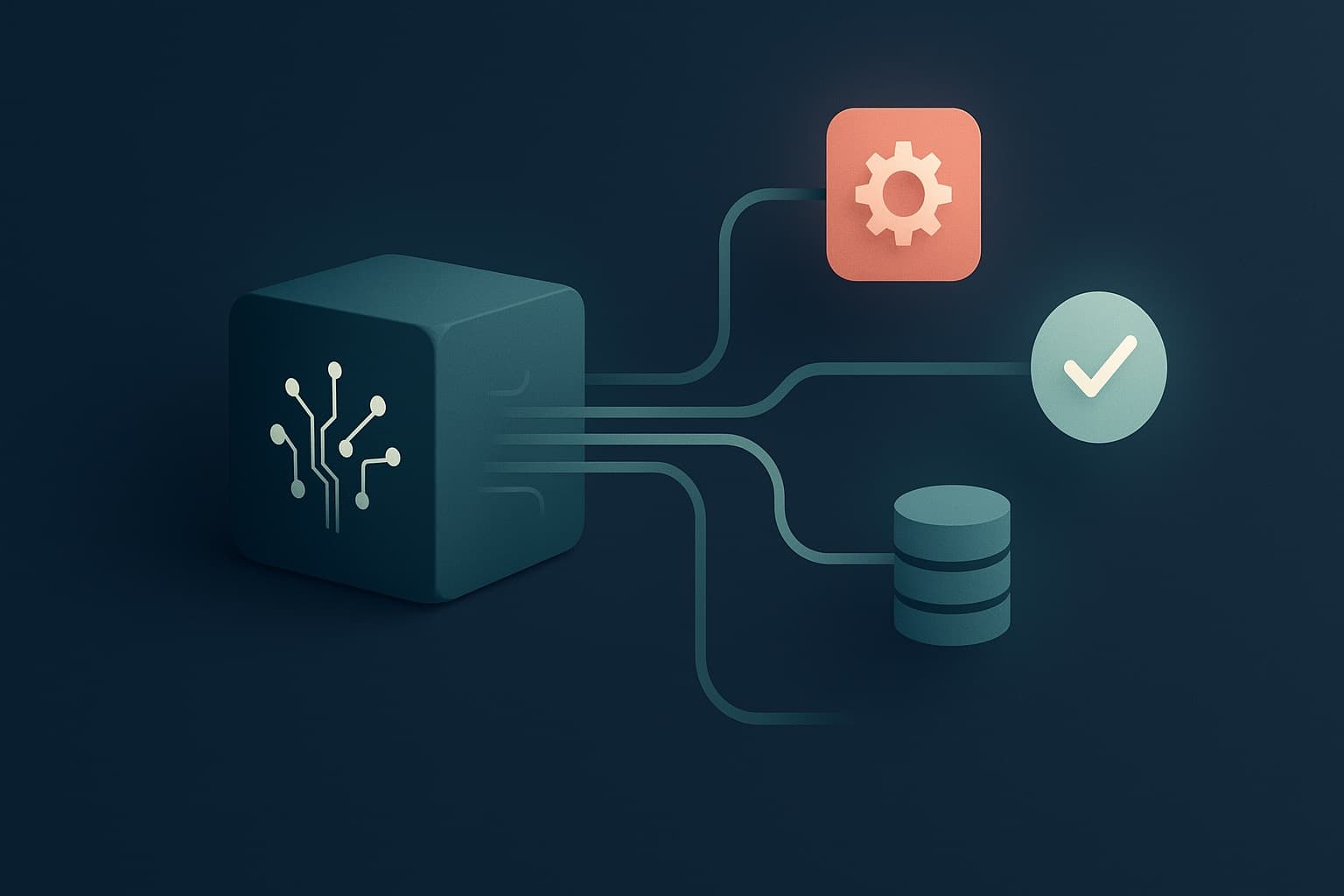
The most common and most useful pattern is a planner that breaks a goal into steps and workers that carry them out. The planner decides what needs doing and in what order; the workers, often simpler agents or plain functions, do the individual jobs. It maps neatly onto real tasks and keeps the hard reasoning in one place while the execution fans out.
Crucially, the workers do not need to be agents at all. Many are just functions or a single model call. Keeping intelligence concentrated in the planner, and making the workers as dumb and reliable as possible, tends to produce systems that are easier to test and far less likely to surprise you.
Specialists and supervisors
- Specialists: each agent owns a domain, one for research, one for writing, one for checking, so each prompt and tool set stays focused.
- Supervisor: a coordinating agent routes work to the right specialist and decides when the task is done.
- Debate or review: one agent produces, another critiques, which can catch errors a single pass would miss.
These patterns shine when a task genuinely has distinct phases or skills. A specialist with a narrow remit is easier to prompt, test and trust than a generalist trying to hold every role in its head at once.
The danger with specialists is fragmentation. Each new role adds a prompt to maintain, a hand-off to get right, and another place for the task to stall. Keep the cast small, give each member a job you could describe in a sentence, and resist inventing a new agent every time the work feels slightly different.
When one agent is the better answer
Before reaching for a team of agents, ask whether a single well-scoped one would do. If the task is mostly linear, fits comfortably in one context, and does not split into clearly different skills, a single agent is simpler to build, cheaper to run and easier to debug. Many problems framed as multi-agent are really one agent with good tools.
It is worth being honest about why teams reach for multiple agents. Often it is because a single agent is failing, and splitting it up feels like progress. Usually the real fix is a tighter scope, better tools, or clearer instructions for the one agent, not a committee of them.
The coordination cost
Every agent you add brings overhead. Agents talk to each other in tokens, so more agents mean more calls, more latency and more cost. Information lost in handoffs, one agent misreading another's output, can compound into failures that are hard to trace. And debugging a conversation between five agents is far harder than inspecting one agent's steps.
None of this is a reason to avoid multi-agent systems. It is a reason to reach for them deliberately, with eyes open to the bill, the delay and the debugging effort they add.
Keeping a multi-agent system observable
If you do build one, observability is not optional. You need to see what each agent decided, what it passed on, and where a task went wrong across the whole chain. Clear logging of every message and handoff turns a tangle of cooperating agents into something you can inspect, fix and improve, rather than a black box that occasionally surprises you.
Without that visibility, a multi-agent system becomes the hardest kind of software to debug: one where the fault might live in any of several agents or in the spaces between them. Build the logging before you build the second agent, not after it goes wrong.
Multi-agent systems are a powerful tool and an easy one to over-apply. The right call depends on whether your task truly has distinct roles and whether the coordination cost is worth it, judgement that comes from having built both kinds. When we design agent systems, we start from the simplest thing that works and add agents only when the problem genuinely asks for them.
Relevant services