Voice AI
Voice AI in 2026: Text-to-Speech and Speech-to-Text That Sound Human
By Niall · 7 min read
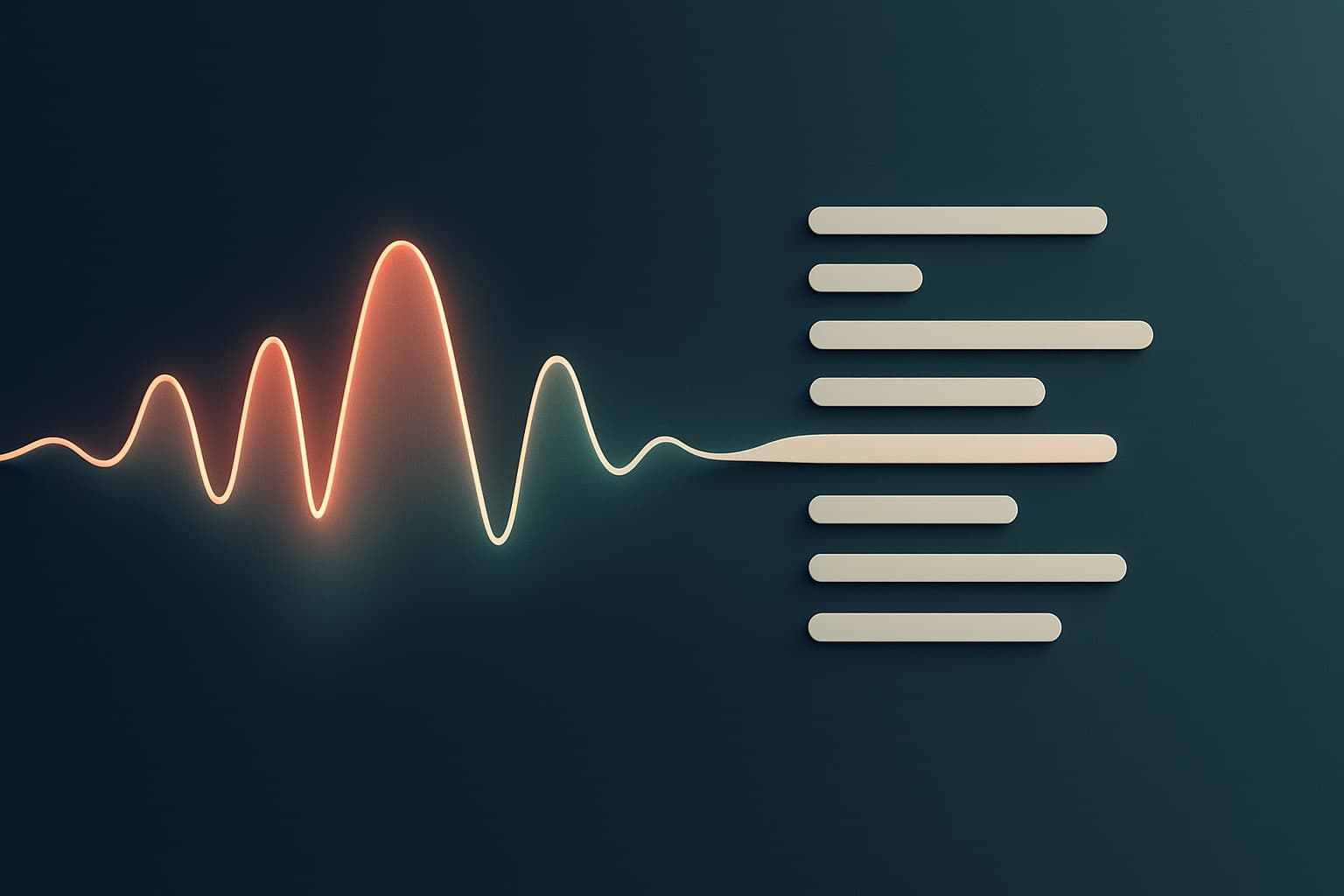
AI voices finally sound human, and transcription keeps up with conversation. Here's the 2026 lineup that makes it work.
Voice AI has quietly become one of the most convincing applications of the whole field. The best text-to-speech now sounds genuinely human, and the best speech-to-text keeps up with natural conversation. If you last checked a couple of years ago, it is worth another look, because the robotic edge has largely gone.
Here is a practical map of the leading tools for turning text into speech and speech into text in 2026, and where each one fits.
Two halves of voice AI
Voice work splits into two jobs. Text-to-speech, or TTS, turns written words into spoken audio. Speech-to-text, also called automatic speech recognition or ASR, does the reverse, turning spoken audio into text. Most real voice products use both, so it helps to understand the leaders on each side.
Treating them as one combined problem is a common mistake. The leaders in each half are often different companies with different strengths, and the right product usually mixes and matches, pairing the best recogniser for your audio with the best voice for your brand. It is rare for one vendor to be the clear leader on both sides at once, so building for a mix is the realistic default.
Text-to-speech: sounding human
On the TTS side, ElevenLabs sets much of the pace, with different models tuned for different needs. Eleven v3 is the most expressive, suited to performance and emotion. Multilingual v2 is the most lifelike across languages. Flash v2.5 trades a little richness for very low latency, around 75 milliseconds, which matters for live interaction.
It is not the only strong option. Cartesia Sonic pushes latency even lower, to around 40 milliseconds, which is excellent for real-time conversation. OpenAI offers capable TTS as part of its platform, and Inworld is built with real-time use in mind. The right pick depends on whether you are optimising for expressiveness or for speed.
There is a genuine trade-off between expressiveness and speed. The most lifelike, emotional voices tend to need a little more time to produce, while the fastest models shave that down for live use. Knowing which way to lean depends entirely on whether you are narrating a video or holding a conversation.
Speech-to-text: keeping up with conversation
On the STT side, ElevenLabs again features prominently. Scribe v2 handles high-accuracy transcription, and Scribe v2 Realtime runs at under 150 milliseconds of latency across more than 90 languages, with accuracy in the region of 93 to 98 percent. That combination of speed, breadth and accuracy is what makes live voice agents feel responsive. For a live agent, that responsiveness is not a luxury; it is the whole reason the conversation holds together.
Deepgram is a strong choice when latency and cost are the priorities, particularly at scale. OpenAI's Whisper is open-source and self-hostable, supporting more than 57 languages, which appeals when you need control or privacy. And GPT-4o transcribe offers another high-quality option within the OpenAI ecosystem.
Self-hosting deserves a mention of its own. For organisations with strict privacy requirements, the ability to run a model like Whisper on your own infrastructure, rather than sending audio to a third party, can be the deciding factor regardless of which managed service scores highest on accuracy.
What these tools unlock
The capability is only interesting because of what it enables. The same underlying models power a wide range of practical uses, and most businesses will recognise more than one of these as relevant to them.
- Transcription: turning meetings, calls and interviews into searchable text.
- Captions: making video accessible and watchable without sound.
- Accessibility: helping people interact with software by voice.
- Dubbing: re-voicing content into other languages.
- Voice agents: real-time assistants that listen and speak naturally.
Many of these can be combined, too. A support call can be transcribed in real time, summarised by a model, and answered in a natural voice, all from the same building blocks. Once those blocks are reliable, assembling them into a product is mostly a question of careful plumbing and judgement.
Each of these used to require specialist tools or manual effort. Now they are an API call away, which changes the economics of adding voice to a product or workflow.
Latency is the hidden make-or-break
For anything interactive, latency quietly decides whether the experience feels natural or stilted. A delay that looks tiny on paper is very noticeable in conversation. This is why the low-latency models, Flash v2.5 and Cartesia Sonic on the speech side and the realtime transcription models on the recognition side, matter so much for live use, even when a slower model scores slightly higher on raw quality. A model that is a touch less accurate but noticeably faster will usually win for anything interactive, and lose for offline transcription where accuracy is king.
A useful way to think about it: people forgive a slightly imperfect word far more readily than an awkward pause. We will happily talk to a system that occasionally mishears and recovers, but a beat of dead air after every sentence makes even an accurate agent feel broken. For live voice, responsiveness is part of correctness.
Voice is increasingly how people expect to interact with software, and the tools to support that are finally good enough to trust. Choosing the right combination for your use case, and wiring it together so it feels natural, is closely related to the conversational and chatbot work we do, where the quality of the interaction is the whole point.
Relevant services